
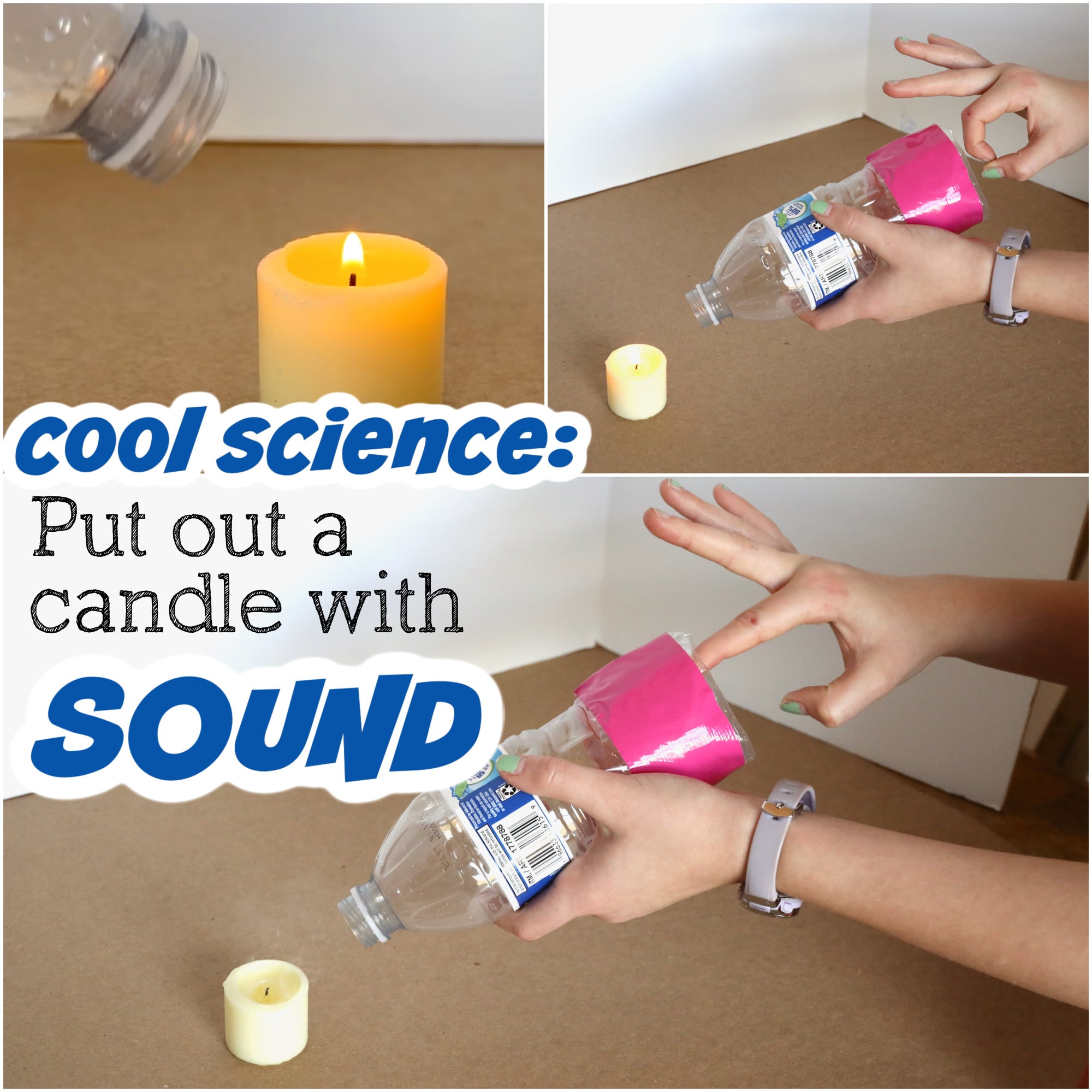
Did you know that you can blow out a candle with SOUND WAVES?
This is the coolest science experiment, and it goes great with a unit on sound.
I’m going to show you how to perform this easy science experiment, and I’ll also explain the science behind it and how you can prove to students that it’s actually the sound that is putting out the candle.
Supplies Needed for Blowing Out a Candle with Sound:
- A 16 – 20 oz plastic water bottle
- A disposable zipper bag or plastic wrap
- Duct tape
- Cereal box cardboard
- Scissors
- A candle
- Matches or a lighter
Step 1: Cut the bottom off of a plastic water bottle.
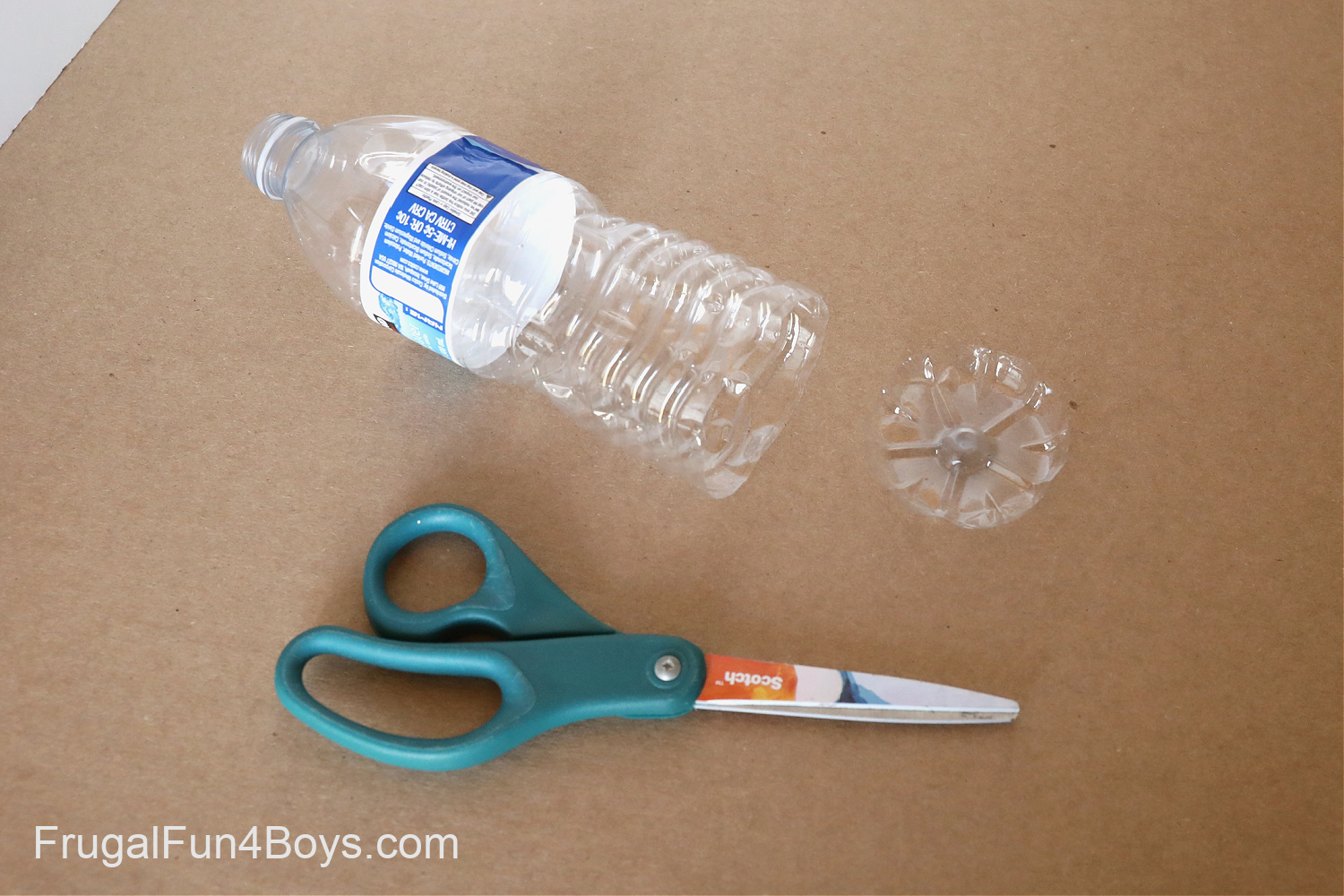
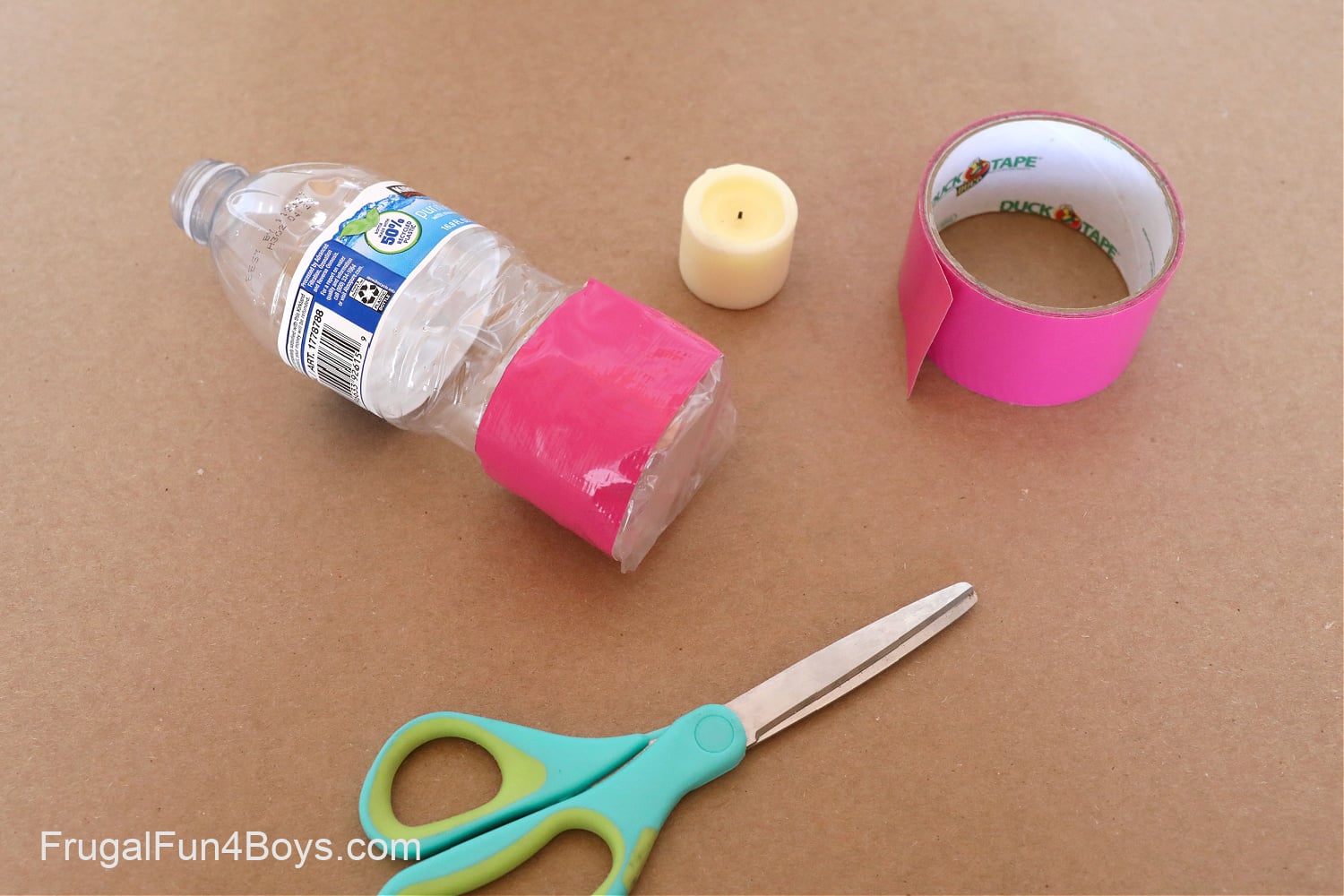
Step 2: Cut out a square of plastic from a zipper baggie and tape it to bottom of the bottle. Stretch the plastic as tight as you can across the bottom of the bottle.
Step 3: Now light your candle! Position the bottle so that the opening of the bottle is near the candle flame. Firmly flick the plastic wrap, and watch the candle go out!
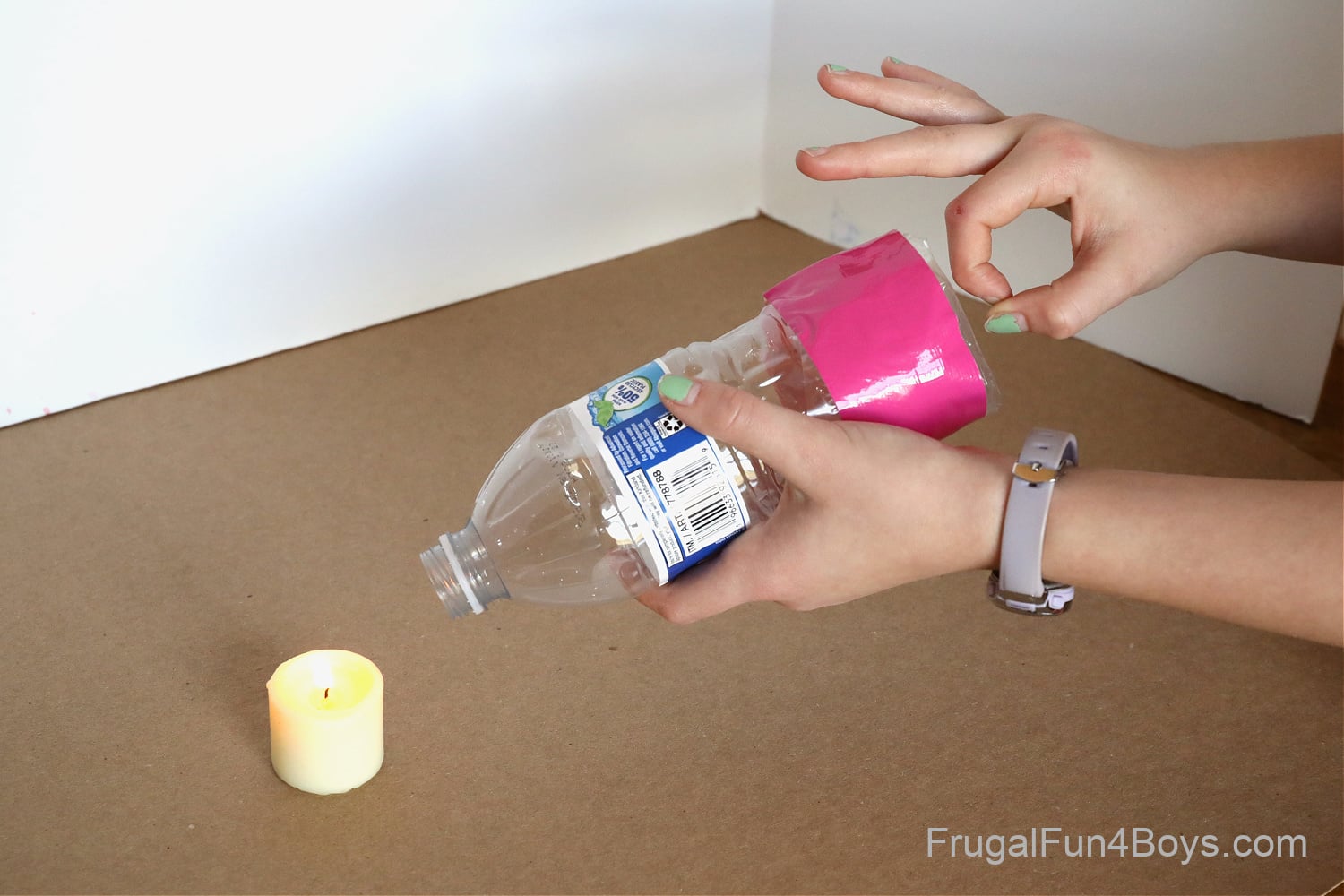
You’ll definitely want to light the candle again and experiment a few times with how far away the bottle can be from the candle and still make it go out. It can be a few inches away and still work! Impressive! Such a fun science trick.
But hang on a minute…
When you flick the plastic wrap, you can feel a little puff of air come out of the bottle. So is it the sound waves from the flick that are blowing out the candle? Or is it actually a puff of air from moving the plastic wrap?
The answer is BOTH.
But to explore this a little further, and to clarify this question, switch out your plastic wrap for cardboard.
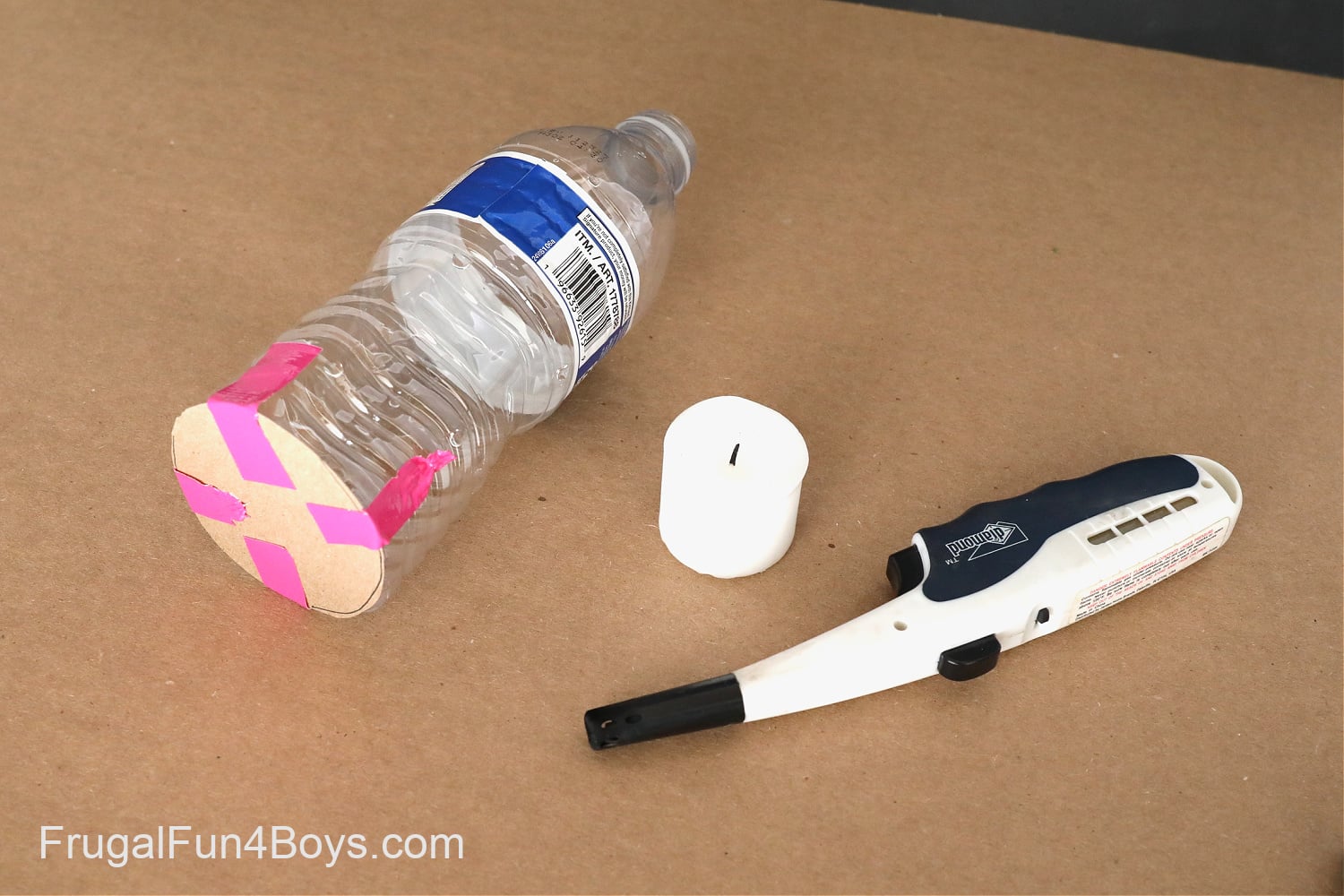
Now try the experiment again!
It STILL works with the cardboard on the bottom of the bottle. When you flick the cardboard, you won’t feel much air movement, but you’ll hear the sound. And the candle still goes out!
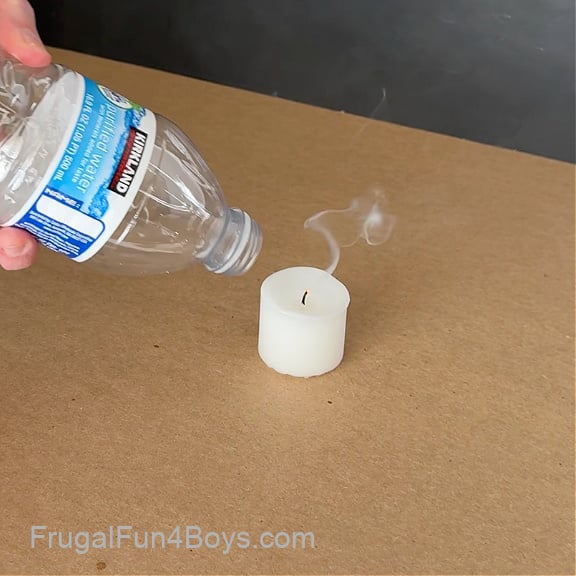
The Science Explanation for the Blow Out a Candle with Sound Experiment:
Sound waves are mechanical waves. A sound begins with a vibration. For example, when a guitar string is plucked, the vibrating motion of the string makes the air molecules around it vibrate.
Sound must travel through a medium such as air or water, or even a solid such as metal or wood. Without a medium to travel through, there is no sound! Sound cannot travel in a vacuum.
Sound waves are compression waves. Molecules in the air compress and then expand again as sound waves move through them. Because of this, sound does cause motion. Sound waves cause your eardrum to vibrate, which enables you to hear! Sound waves can also move a candle flame, and waves with enough energy will put out the candle!
Here’s another fun way to see the effects of sound waves on a candle. Grab a bluetooth speaker and play some music with the volume turned up! A song with a lot of bass in it works great.
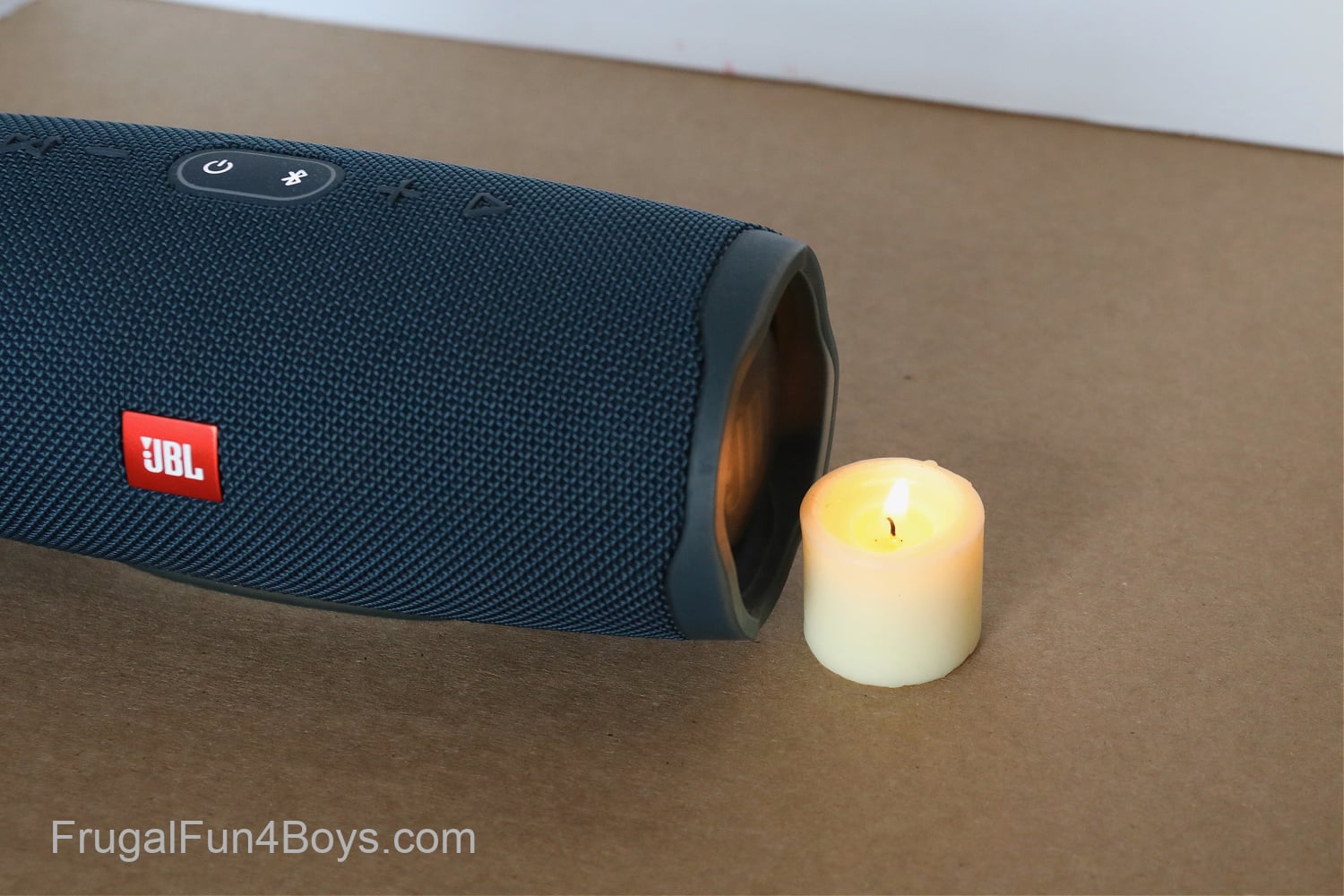
We were not able to put the candle out with the speaker, but the flame was definitely dancing around in time to the music!
Need more science experiments with sound?
Try making some Craft Stick Harmonicas! This is a super cool toy to explore. Move the straws, and the pitch changes!
Experiment with different thicknesses of rubber bands, etc., to find out what changes the pitch.

0 Comments
Post a Comment