
We’re back with more LEGO life science! Challenge kids to use their LEGO bricks to build a model of the human heart.
I really love using LEGO bricks to create models. One huge benefit is that you don’t have to purchase any materials. Just use the bricks you have! This saves on the monetary cost of a project, and also eliminates supplies that will get used and then thrown away once the project is no longer needed.
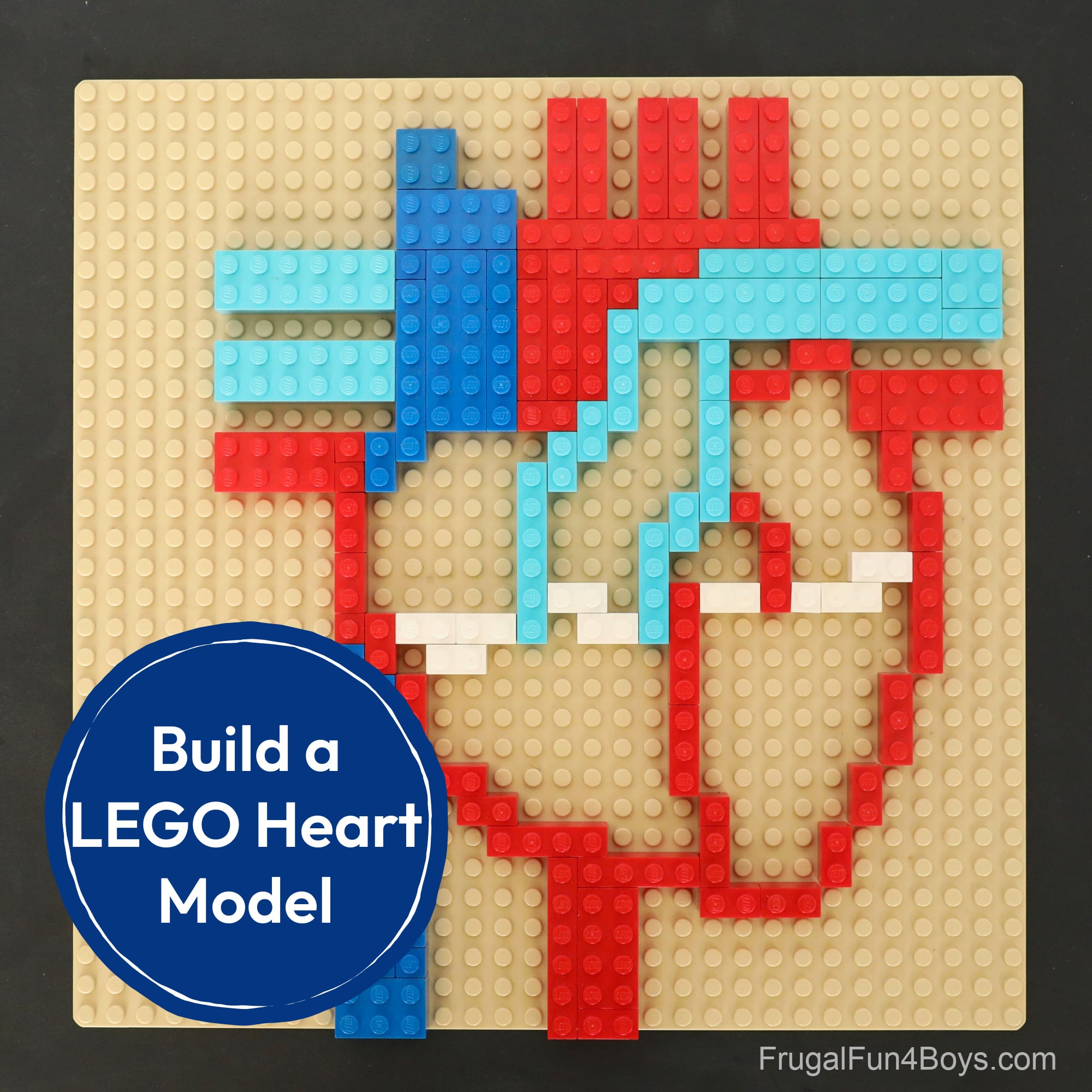
Building a scientific model may seem like a busywork type of project, but I think that the process of creating a model is very valuable. You might read something and or listen to an explanation and think you understand it, but then having to re-create it requires a more thorough understanding about how the various parts fit together. Labeling the parts of a model and then presenting that information to someone else also helps move the information from short-term memory to long-term memory.
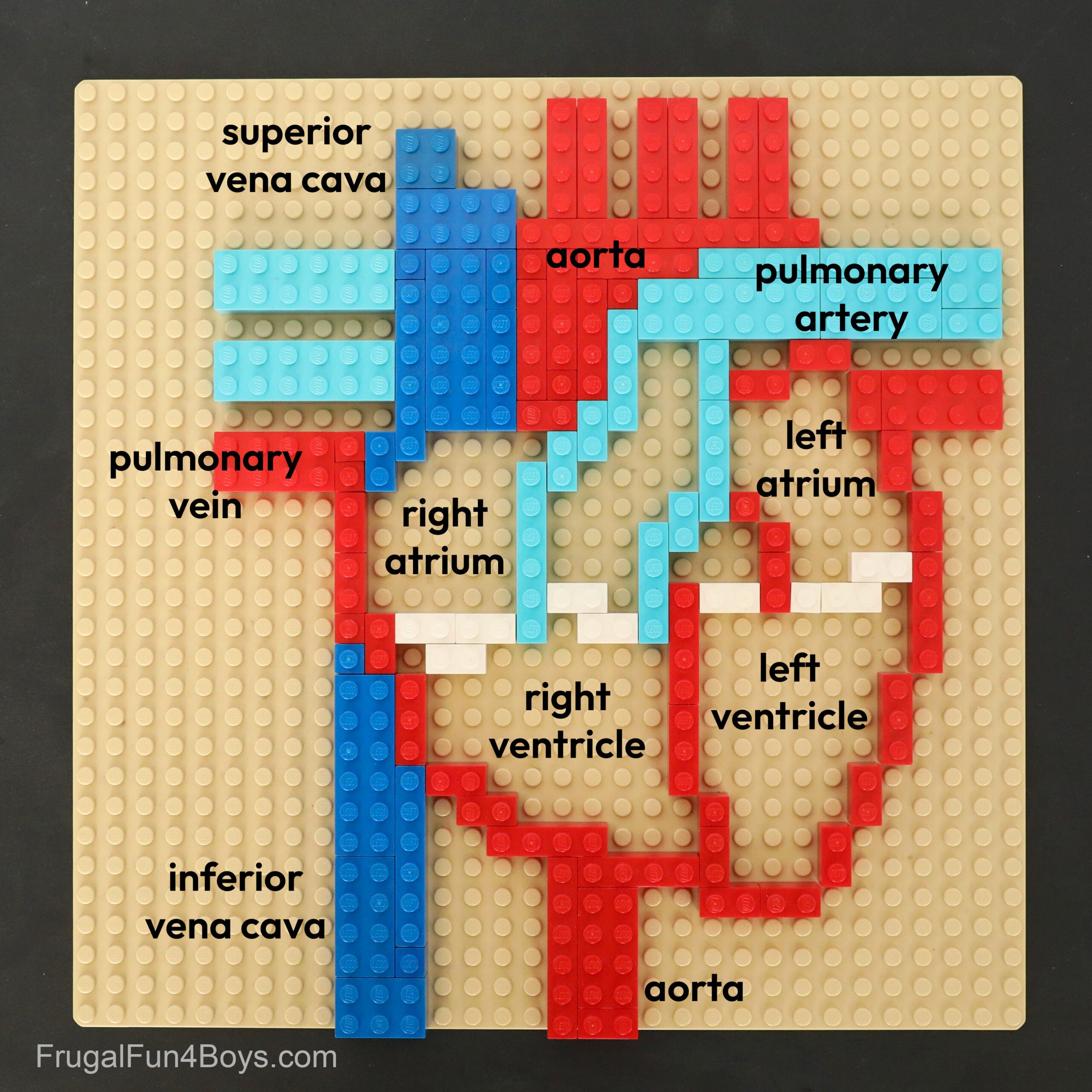
After kids have built their heart model, ask them to explain how blood flows into the heart (from the vena cava), how it travels to the lungs, and then returns oxygenated, and then is pumped from the left ventricle through the aorta to the rest of the body.
This post contains Amazon affiliate links, which means that I earn from qualifying purchases at no additional cost to you.
Supplies Needed:
- 32 x 32 LEGO baseplate – I really love the tan color, but they seem to be discontinued. Here’s a green 32 x 32 baseplate and a white 32 x 32 baseplate. Amazon also has blue.
- Basic bricks in red and blue. It helps to have more than one shade of blue!
One downside to LEGO bricks in this project is that the heart is a 3D object. It’s a little tricky to convey how the arteries and veins overlap. Looking at a 2D picture of the heart in a science book or online can really help kids come up with a design. But it’s still easier to draw veins that look 3D than to build them with LEGO bricks!
I chose to use two shades of blue to help distinguish between the pulmonary artery (deoxygenated blood) and the vena cava (also deoxygenated blood).
Janie is studying the human body this year using Exploring Creation with Human Anatomy and Physiology, and she recently completed the chapter on the circulatory system.
If you need a book on the heart, there are tons of options! We have really enjoyed Seymour Simon’s science books. Here is The Heart: All About the Circulatory System and More on Amazon.
Then here’s another book on The Heart and Circulatory System that looks really good.
Want more Life Science Lessons with LEGO Bricks?
Build a LEGO Cell Model – LEGO bricks work surprisingly well for building organelles!

Build a LEGO Skeleton – obviously, it’s not going to be possible to build all 206 bones in the human body! But kids can build the major ones, and it will really help them remember the bones and the names.

1 Comments
Rebecca Jan 27, 2026
This is fabulous! I teach A&P, and am always searching for more ways to incorporate LEGO ideas into my list of hands-on projects!
Post a Comment