
Here’s a super cool science experiment to do with plastic Easter eggs!
By adding modeling clay to plastic eggs in strategic places, you can make your eggs do all sorts of amazing tricks. They can balance in unexpected ways, pop back up when you knock them down, or spin for a really long time.
I love this spring STEM activity because kids can really explore with the materials and make their own scientific discoveries.

This science experiment focuses on an object’s center of gravity, which is the average location of the weight of an object. In other words, it’s the object’s balance point.
Supplies Needed:
- Plastic Easter eggs
- Modeling Clay

Try balancing an empty plastic egg on its end. It doesn’t matter which end you try to balance it on because it won’t work either way!
Make an Egg Balance on its Small End
Put some modeling clay in the smaller end of an egg. Close the egg back up.

Now try balancing the egg on its smaller end. It works!!
If you can’t get the egg to balance straight up and down, try squishing the clay to change its position slightly. Small adjustments can make a big difference in the center of gravity.

Make an Egg Pop Up
Now put clay in the larger end of the egg and close it back up. Stand the egg up, and adjust the clay a little if it doesn’t balance the way you want it to. Try pushing the egg down, laying it down on its side. Remove your hand and it will pop back up!
It’s also fun to make this egg wobble back and forth on its rounded bottom.
Make an Egg Flip Over End to End
This next one is a fun one!
Pinch off two pieces of modeling clay that are as close to the same size as possible.

Squish one piece of clay into each end of the egg.

Close the egg back up. Then try rolling it so that it flips end over end. It might take a little practice, but you should be able to make the egg do this without much trouble! It’s really fun to watch.
For comparison, try flipping an empty egg end over end. It won’t work!
Make an Egg Spin
Use the same egg, with clay in each end, and lay it on its side. Then give it a spin. It should spin really well and spin for a LONG time!
Spin an empty egg for comparison. The empty egg will spin more erratically and will not spin for as long. The added weight in the egg with the clay will make it spin faster, and it will stay in one place. It will also spin for a longer time.
More Easter STEM Activities
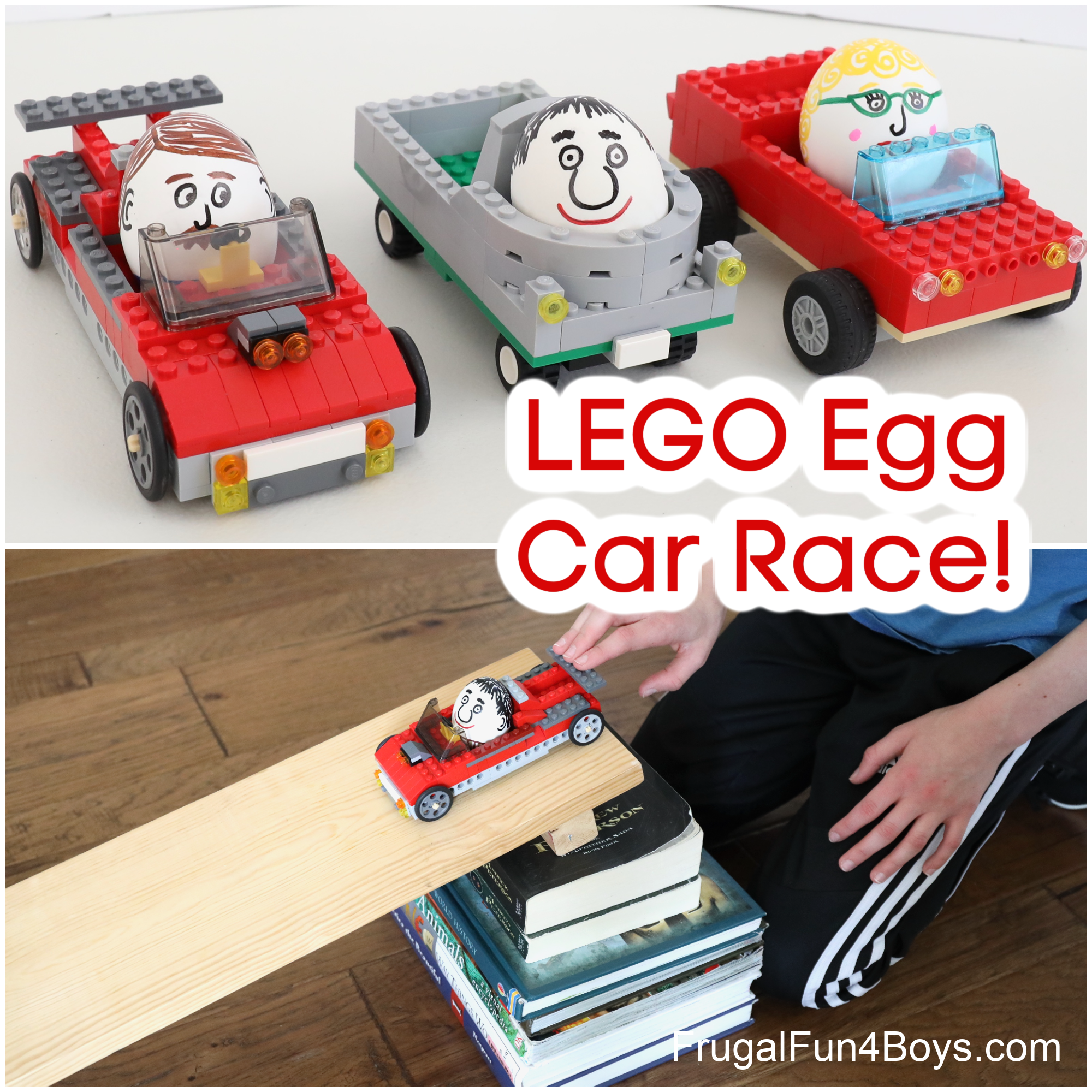
LEGO Egg Car Race – Here’s another fun STEM challenge! Grab your LEGO bin and challenge kids to build cars that carry an egg. The car that rolls the farthest wins!
2 Comments
Sue G. Apr 15, 2025
These are such fun ideas! My homeschool group will love trying these out. I'll be stocking up on plastic eggs at the after-Easter sales so I'll have a collection for future years. I love when kids discover scientific laws while they're just playing and having fun. And they'll love bringing this home to show off their tricks to their parents.
Grandma Mar 31, 2026
I love your activities! Love that the kids are exploring and learning and not on their screens!
Post a Comment