
Here are two simple science experiments for kids that demonstrate the concept of density!
Density is defined as the amount of matter contained in a certain volume of a substance. Density can be calculated with a simple math formula: D = m/V. Mass is generally expressed in grams and volume in cm3. Or you can use kg and m3. We’ll talk about actually calculating density in another post.
These density science experiments are great for middle schoolers, but they work for the upper elementary grades as well. Elementary students may not be able to handle the math, but they can certainly understand that some things feel very heavy for their size, while others feel light for their size. That’s density!
This post was originally published in February 2015 and updated in September 2026.
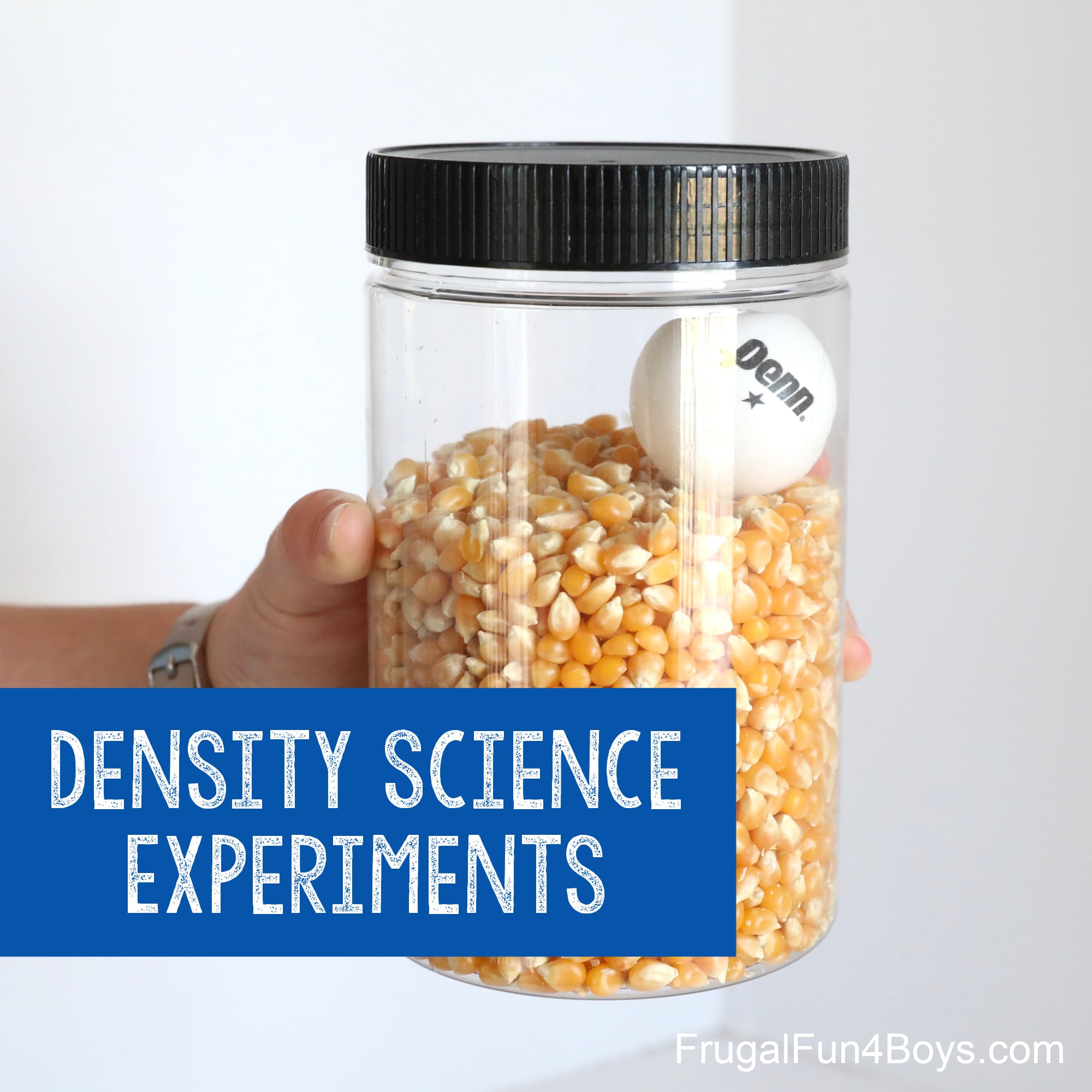
Density Experiment #1: Turn a marble into a ping pong ball
(This is really a demonstration, not an experiment.)
Supplies Needed:
- A plastic container with a lid
- Unpopped pop corn
- A large marble
- A ping pong ball
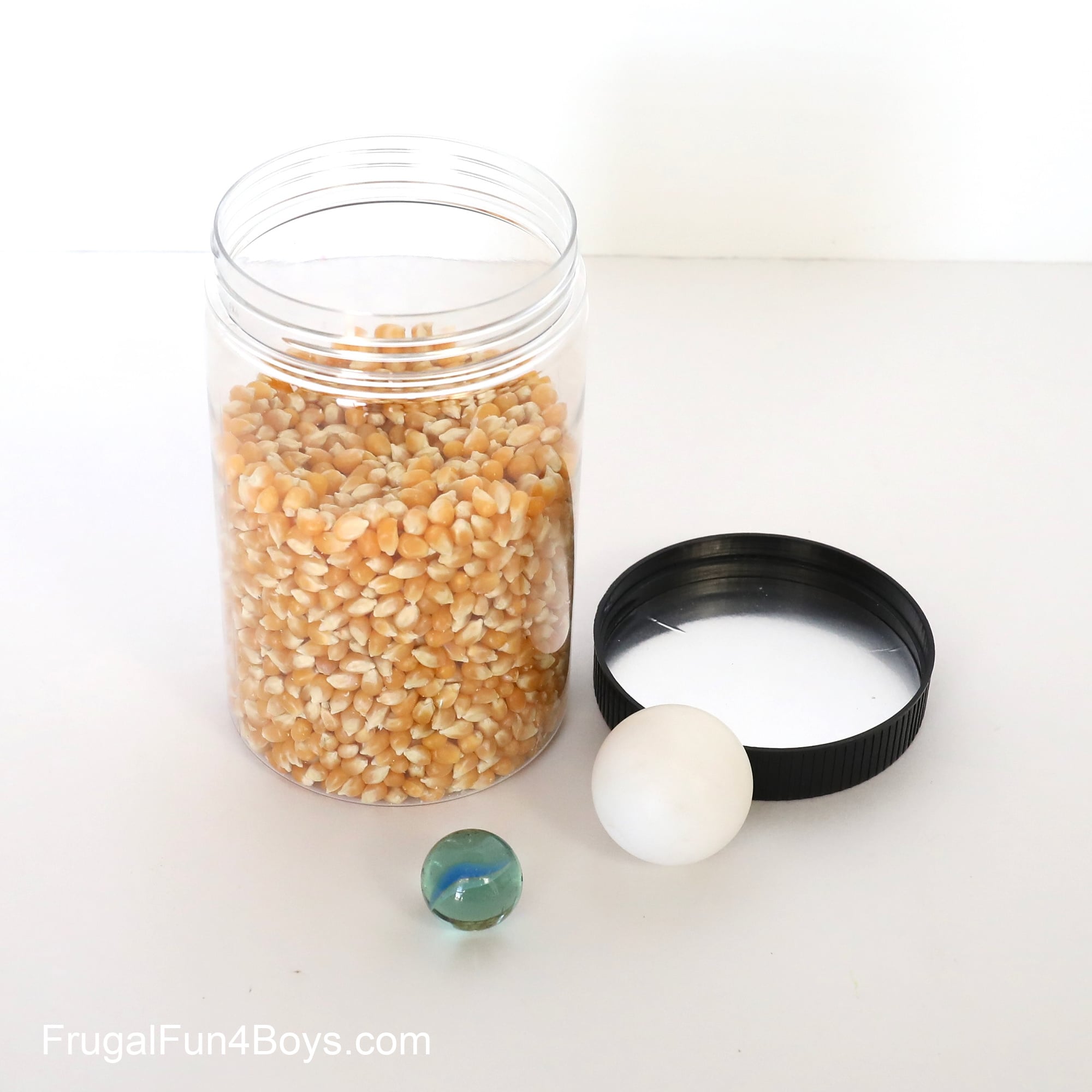
Fill up the contain about 2/3 of the way with popcorn. Then push the ping pong ball to the very bottom of the jar.
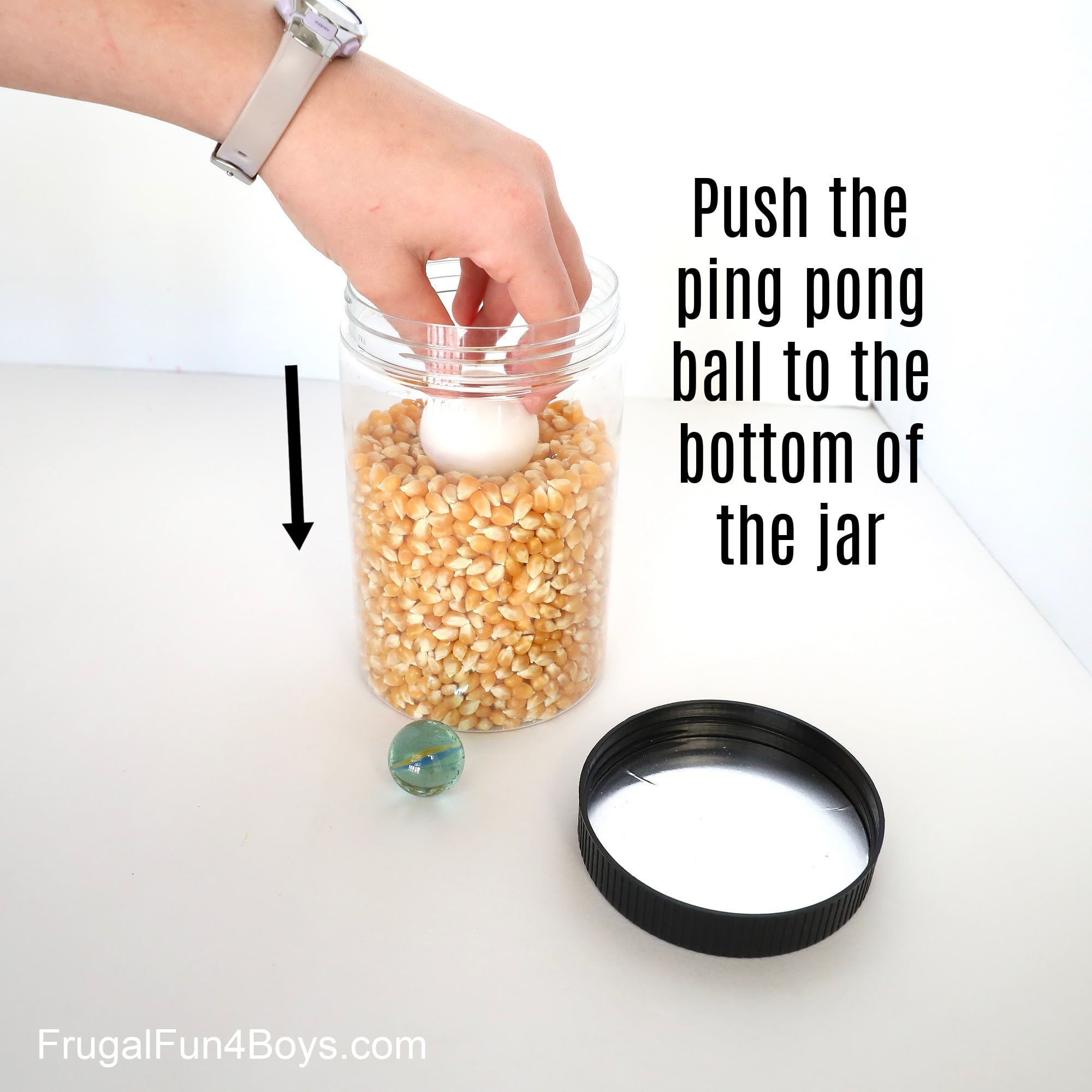
Then place the marble on top of the popcorn. Put the lid on your container.
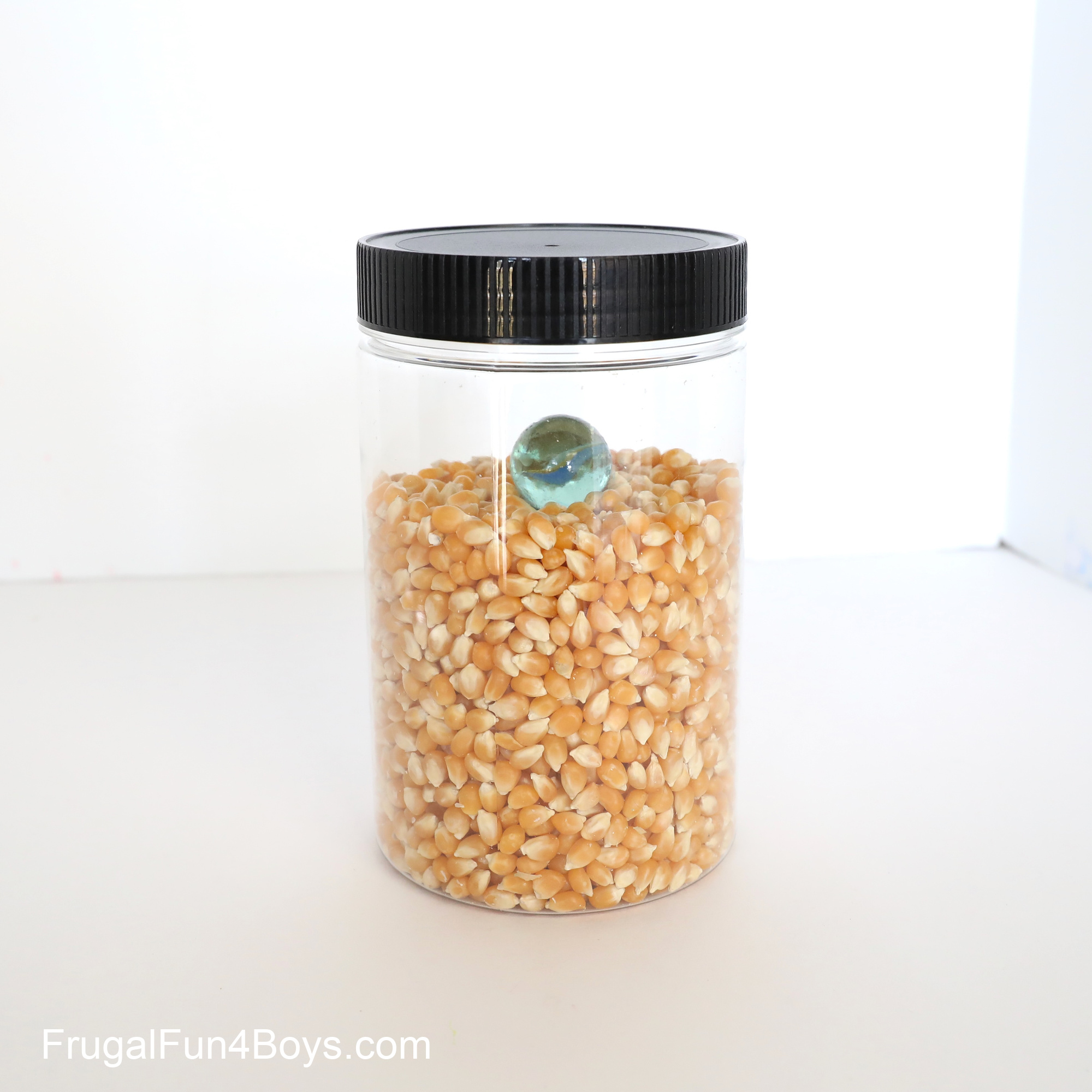
Now shake the jar!
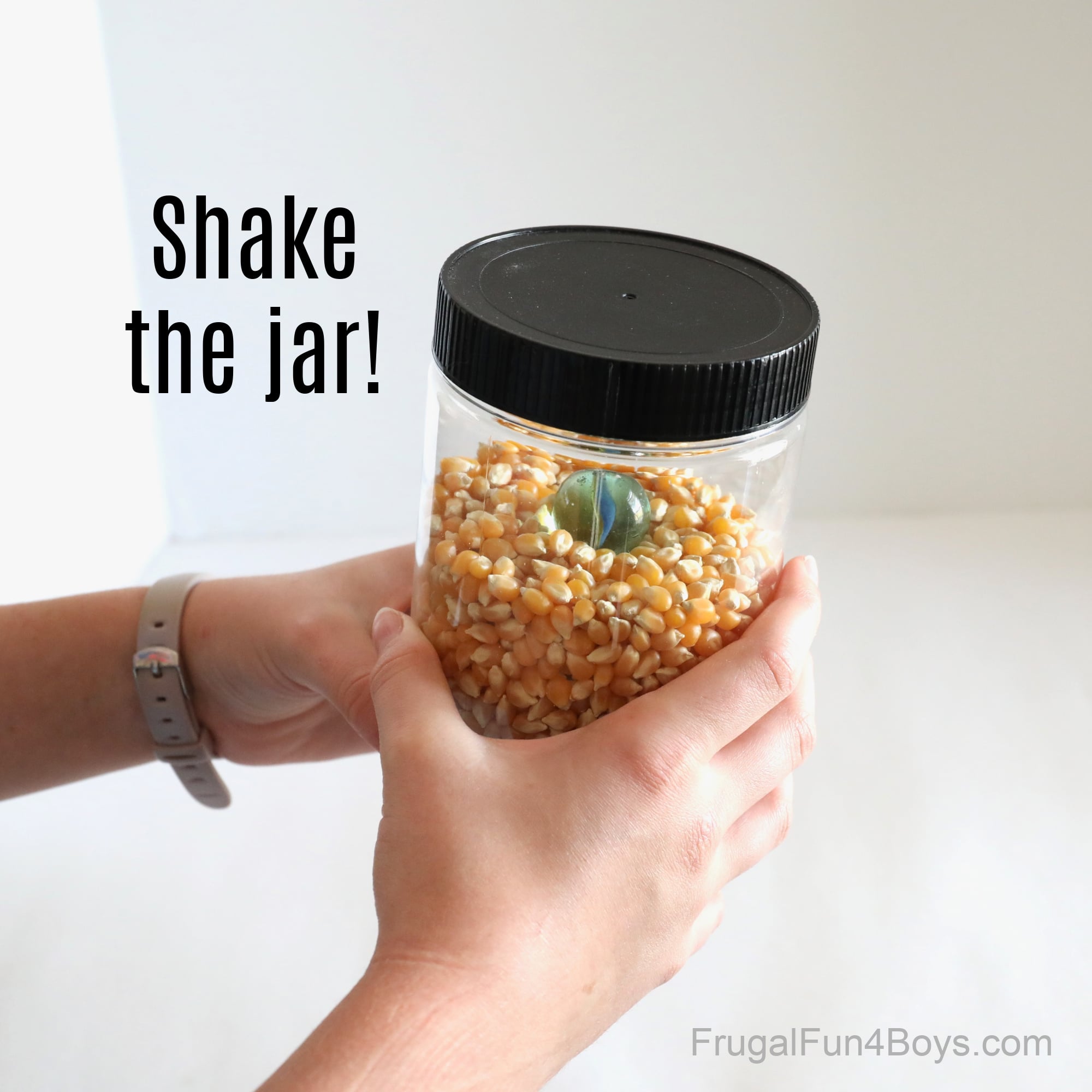
What happens next is so much fun! The ping pong ball quickly pops up to the top, while the heavy marble sinks into the popcorn.
We did this in my middle school science class last week, and I wished that I’d had my phone ready to take pictures of their faces when they saw what happened. They were quite amazed!
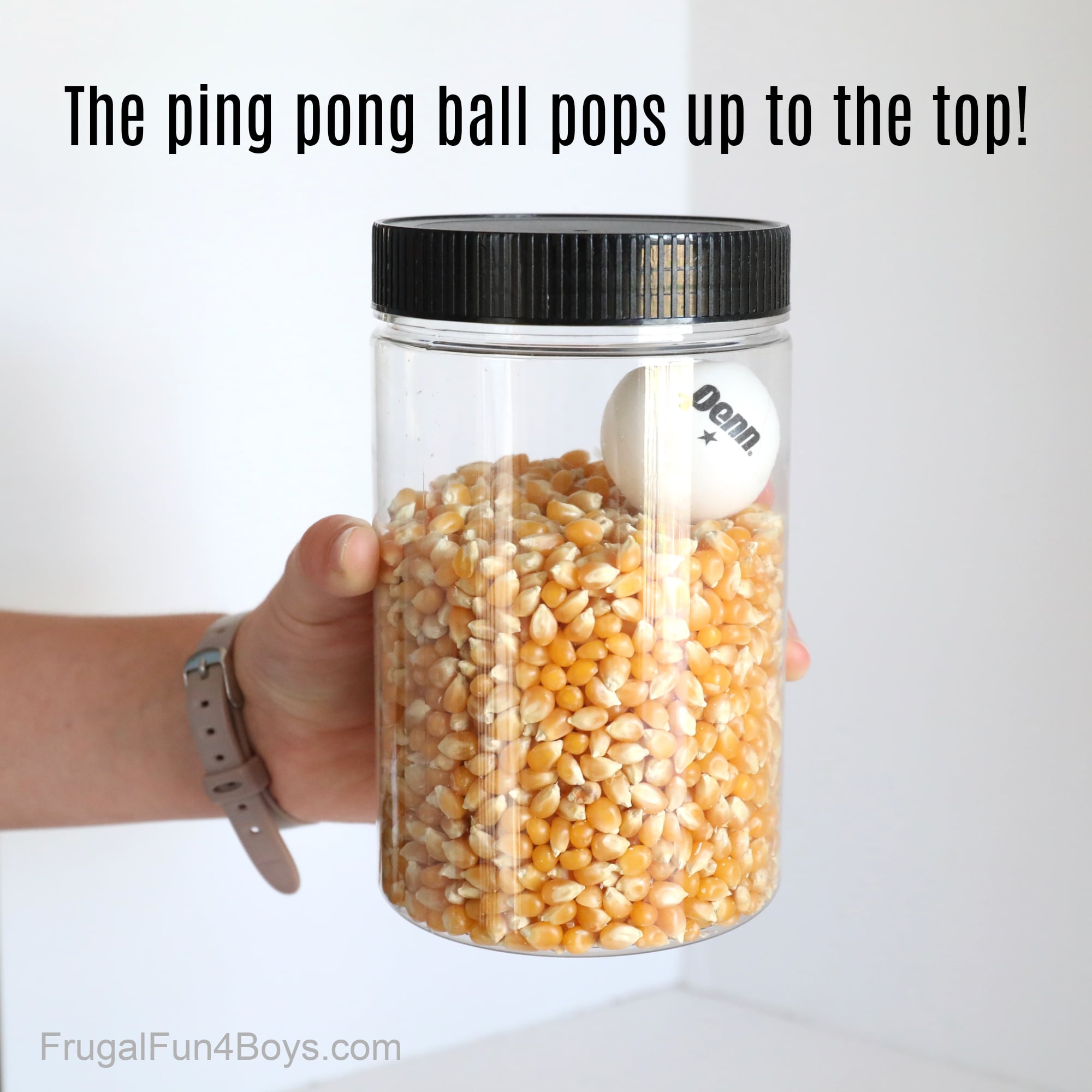
The Science: The ping pong ball is much less dense than the corn, so it quickly makes its way to the top of the corn. The marble is more dense than the corn, so it sinks down into the corn. This is the same concept as a ping pong ball floating in water – the ball is less dense than the water, so it floats. Everyone expects a ping pong ball to float in water, but the way it behaves in the corn is really fascinating!
We tried experimenting with several small marbles to see if we could get a layer of marbles at the bottom with a layer of corn on top. It didn’t work. The marbles don’t make their way all the way to the bottom, and they will actually travel upwards if you’re shaking vigorously. But they never come to the top the way the ping pong ball does!
Density Experiment #2: Saltwater Float and Sink
Will an egg float in water? It will sink… unless it’s not very fresh, in which case it may float. That’s actually a sign that the egg is bad, so be sure to use a nice fresh egg for this experiment.
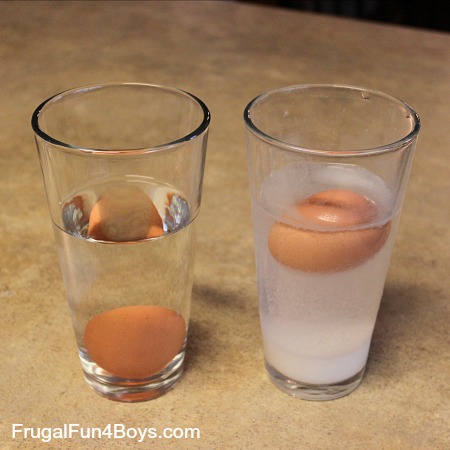
Supplies Needed for the Floating Egg Demonstration:
- Two identical glasses
- Water
- Salt
- An egg, or two
You can do this experiment two ways. For younger kids, you can compare an egg sinking in fresh water with an egg floating in salt water. Stir about 1/4 cup of salt into your glass. You want the water to be nice and salty!
For middle schoolers, it works well to add the salt 1 teaspoon at a time and test the egg after each teaspoon is dissolved. This allows the students to find the point at which the density of the water becomes high enough to allow the egg to float. Make a chart with your results!
After the impressive results we got with the egg, we decided to experiment with other objects to see if we could find things that sink in plain water but float in salt water.
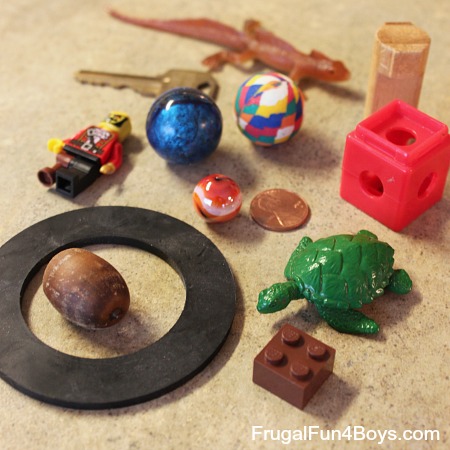
We did! An acorn floated in salt water, but not fresh water. So did this rubber ring thingy from our junk drawer.
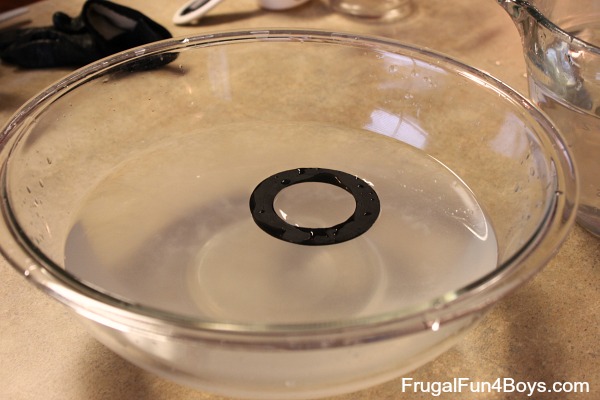
Even items that floated in both salt water and fresh water floated visibly higher in the salt water. This was an interesting experiment for all ages!
The Science: Adding salt to the water increases the density of the water. So items that are just slightly too dense to float in fresh water will float in salt water!
Water is able to dissolve salt because of its polar structure.
1 Comments
Amy Jun 9, 2016
I came across this last night. Today my son made a marble turn into a ping pong as his trick for his class talent show. It was a hit!! Will be using it this summer with him to explain why this happens. Thank you!
Post a Comment