
Make a sedimentation jar! This is a fun earth science experiment that is super simple yet very effective.
Show kids in a hands-on way how sediment is laid down by water and how sedimentary rocks are formed while using supplies that you probably already have. This is perfect for an earth science unit on rocks or geology.
Now, to be completely honest, this is not one of those “wow factor” science experiments. Nothing shocking is going to happen. But it’s very effective in showing how sediment naturally separates into layers.
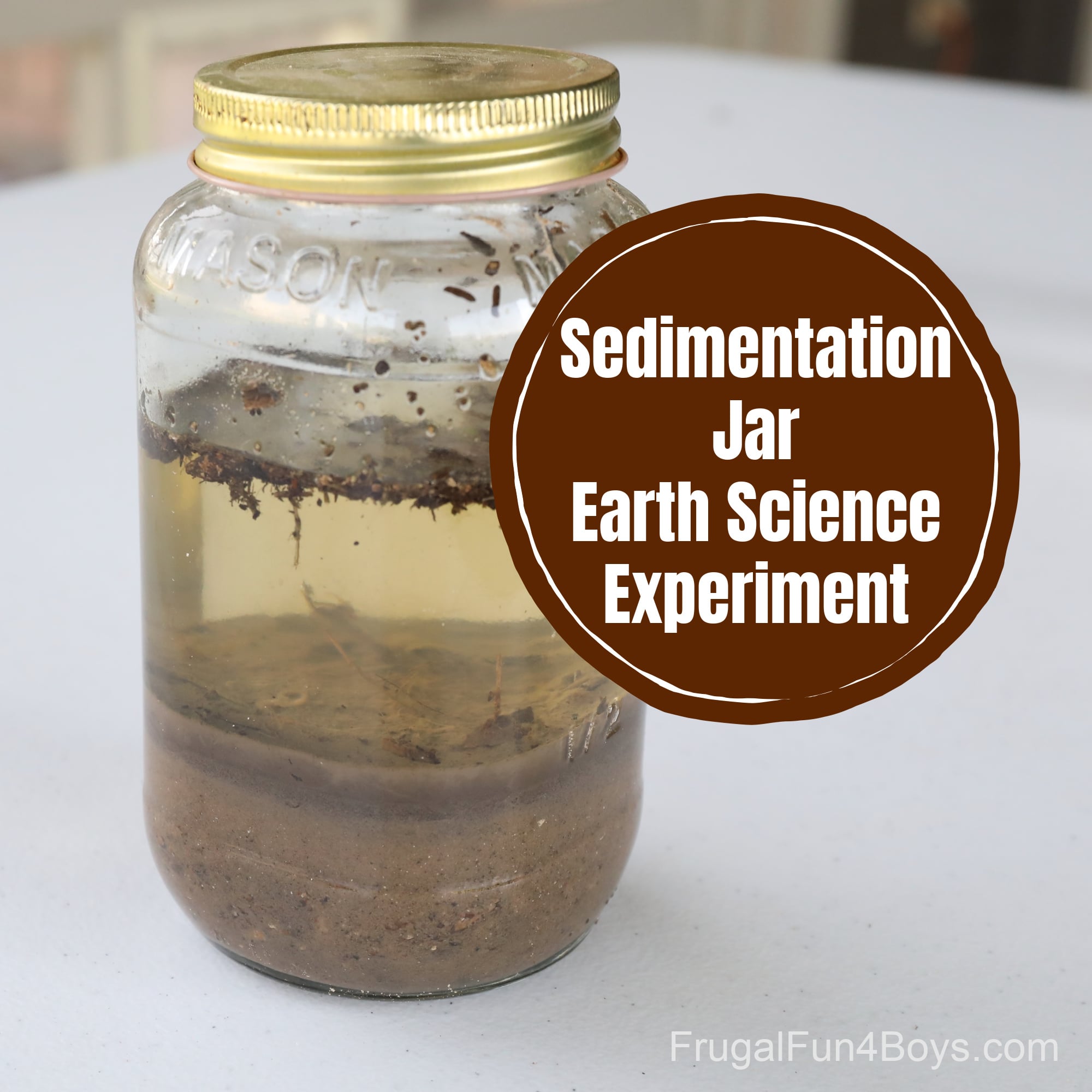
Supplies Needed for a Sedimentation Jar:
- A jar with a lid – like a spaghetti sauce jar or something similar
- Sand
- Dirt – from your yard is fine
- Small rocks or pebbles
- Water

First, we’re going to add sediment to the jar. Sediment is defined as bits of rock, minerals, and organic material that are transported by water or ice. Sediments are solid materials that don’t dissolve in water.
Add a few inches of dirt, sand, and gravel to your jar. You may want to add a larger rock or two. It’s up to you!

Then fill the jar the rest of the way with water.

Now shake your jar really well to mix all of your sediments.

Let the jar sit for several hours or overnight.
The bottom three layers will settle quickly, but it will take 24 hours or more for the clay and silt to settle. It took about 3 days for the water in our jar to be completely clear.
The Science Behind Sedimentation
When water is moving, like in a river or stream, it can carry sediments that are quite heavy! But when the water slows down, it drops the heavier sediments and only carries smaller particles. Water that is perfectly still can’t carry any sediment at all!
The heavier the particles, the faster the water needs to be moving in order to carry them. When you stop shaking your jar, the heaviest sediment will land on the bottom of the jar first.
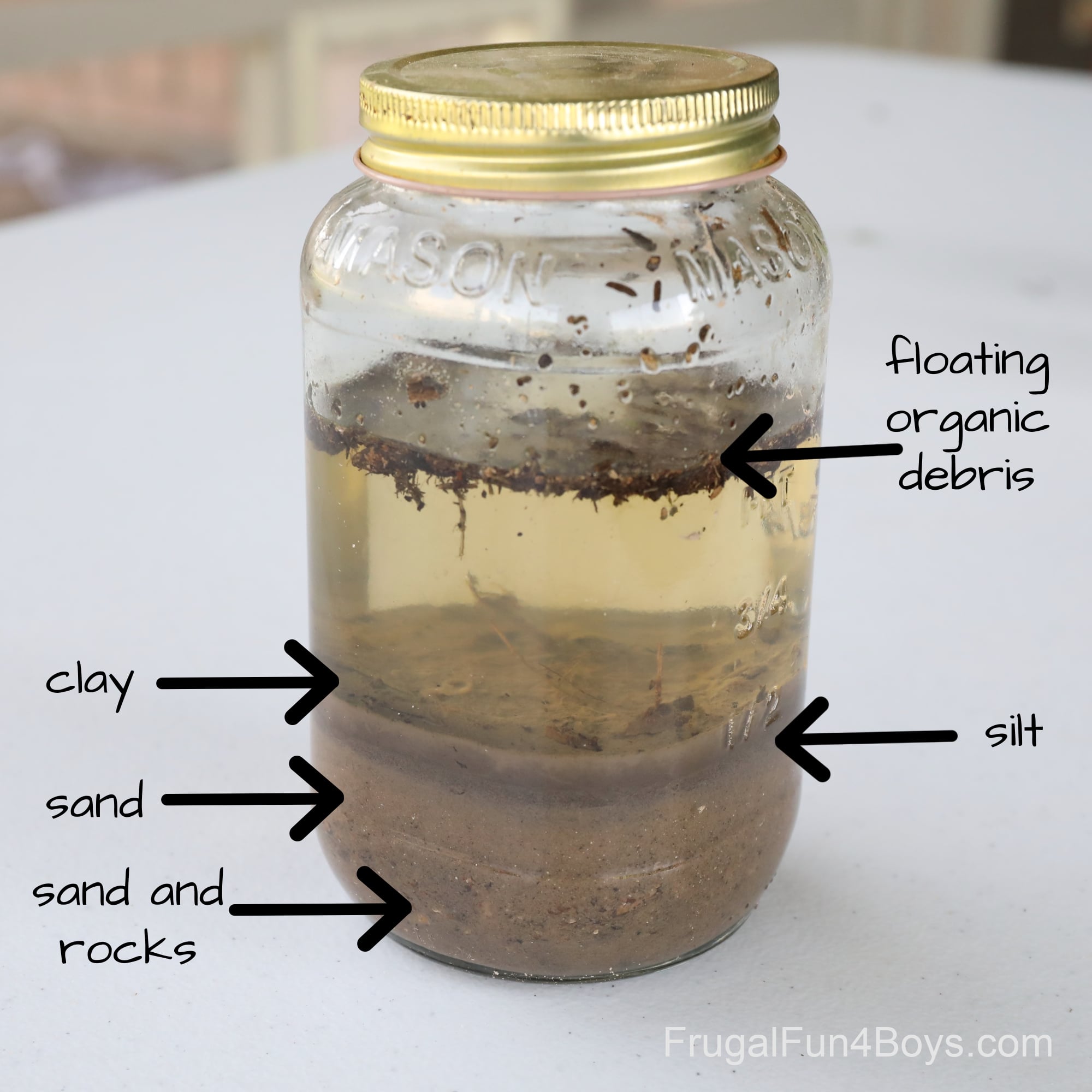
The sediments drop so quickly that you won’t see a layer with only rocks. The bottom of the jar will be rocks mixed with sand. This type of sedimentation forms a rock called conglomerate.
We had a layer of only sand on top of our layer of sand/rocks.
Then we had a layer of silt, and a layer of clay on top of that.
At the top of our jar, we had a layer of floating organic matter than had been in the soil that we dug from our yard. This consisted of bits of sticks, leaves, and roots.
How Do Sedimentary Rocks Form?
Layers of sediment are laid down by water (and sometimes wind). The sediments are pressed together by the immense pressure of the layers above them, and are cemented together by dissolved minerals such as calcite and silica.
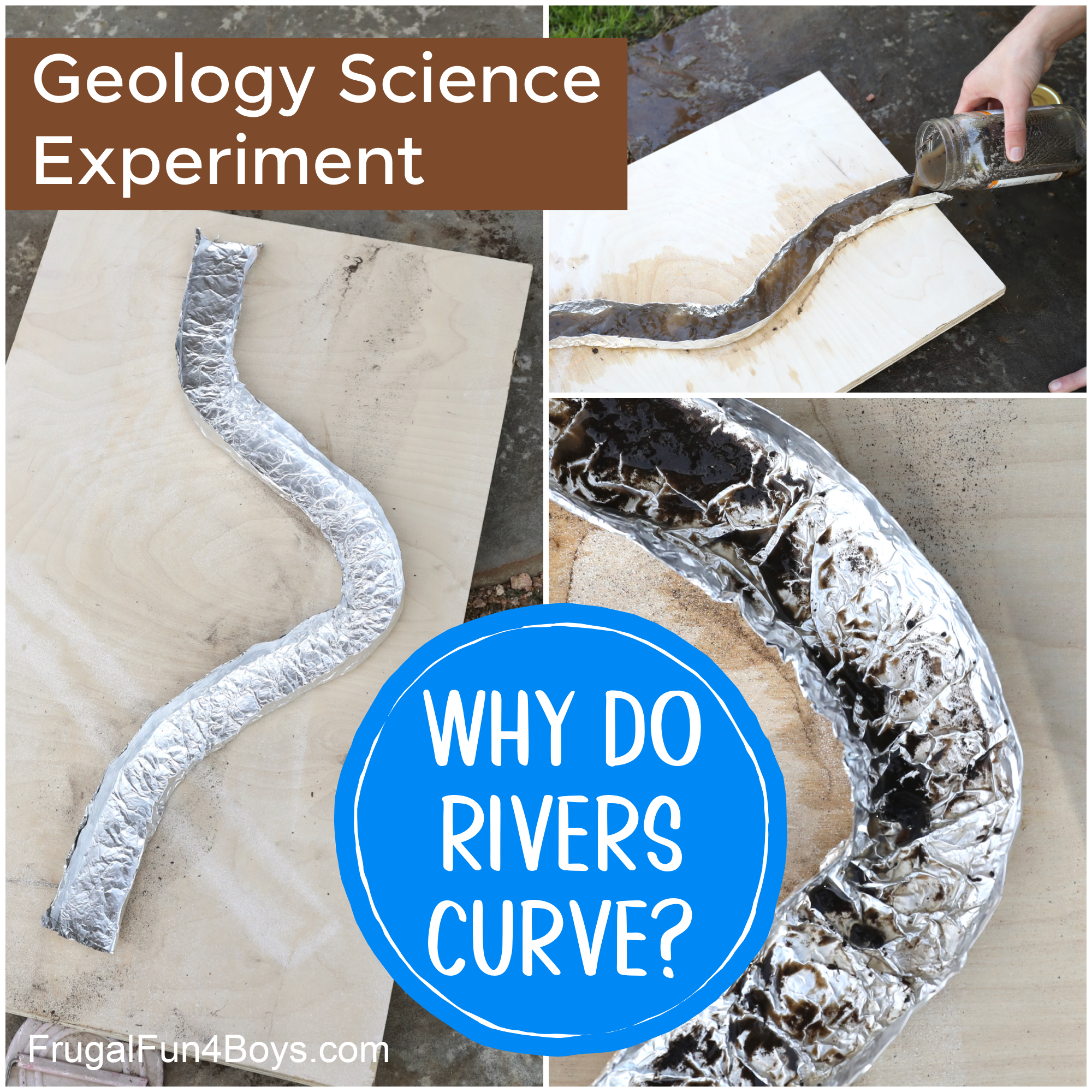
If you want to learn more about sedimentation, head over to our Why Do River Curve? Science Experiment!
0 Comments
Post a Comment